
Our building inspections in Melbourne are the statutory inspections a building surveyor carries out under Victoria’s building laws. They include the mandatory stage inspections required by your building permit, final inspections that lead to an occupancy permit or certificate of final inspection, pool and spa barrier inspections, and assessments of existing or unapproved building work.
These inspections check that work complies with the permit, the approved plans and the building regulations. That’s different from a pre-purchase property inspection, which a buyer commissions to report on a property’s condition before buying.
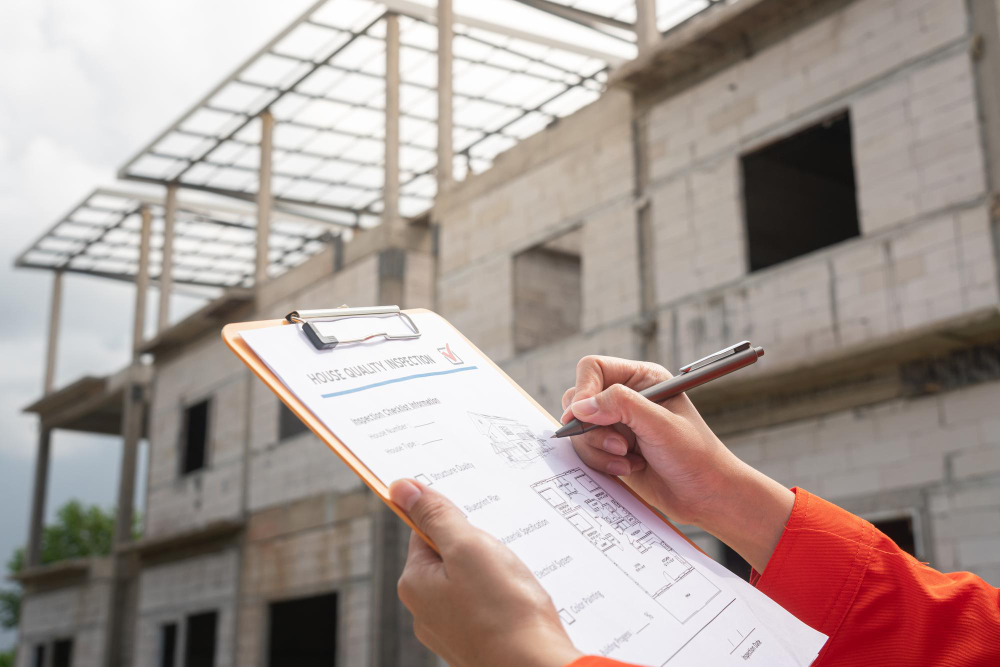
The Building Regulations 2018 prescribe the stages at which the builder must notify the relevant building surveyor so the work can be inspected. For a typical new home or extension built on a concrete slab, they are:
Not every project has every stage. When we assess your application we decide which stages apply, and your building permit lists them. Swimming pools and spas have their own prescribed stages, and apartment buildings and some other building classes have additional ones. For more detail, read our guide to mandatory building inspections in Victoria.
When all the work is complete, we carry out the final inspection. What happens next depends on your permit:
Before either is issued, we may need supporting documents, such as plumbing compliance certificates and certificates or statements from engineers and other practitioners involved in the work. Having them ready avoids a wait at the end of the job.
We also carry out pool and spa barrier inspections. Every registered pool and spa in Victoria needs a certificate of barrier compliance lodged with council every four years, and we can inspect, explain any defects, re-inspect and issue the certificate.
If work was done without a permit, or you’ve found unapproved work on a property you own, an inspection is the first step. We look at what was built, check it against the building regulations and set out what’s needed to bring it into line. It isn’t a backdated building permit. See illegal and unapproved building works for how the process works.
Mandatory inspections are booked by notification. The builder named on the permit, or the owner-builder, must tell the relevant building surveyor when each stage is complete. Here’s how it works with us.
Your building permit lists the mandatory notification stages for your project. Keep a copy on site and make sure your builder and trades know which stages must be inspected before work moves on or is covered up.
Contact us as each stage is reached, not after the next stage has started. Work that’s covered before it’s inspected may need to be opened up again, which costs time and money.
We inspect the work and record the result. Since 1 September 2026, the relevant building surveyor must also give council a record of each inspection within seven days of carrying it out.
If something needs attention, we’ll explain it and issue a direction to fix. Once it’s fixed and re-inspected, the stage is approved and work can move on. At completion, we carry out the final inspection.
A problem found at a stage inspection is far cheaper to fix than one discovered after the walls are lined. The main tool the law gives building surveyors is a direction to fix:
The stage isn’t approved until the work is fixed and re-inspected, and the building surveyor can direct that work stop until it has been inspected.
If a direction isn’t complied with, the building surveyor must notify the Building and Plumbing Commission and the owner, and can escalate to a building notice or building order. Keeping the builder, owner and surveyor talking early helps sort issues out well before that point.
No. A pre-purchase inspection is a report a buyer commissions to understand a property’s condition before buying. It’s a private arrangement between the buyer and the inspector, and it doesn’t approve or certify building work.
The inspections on this page are statutory. They’re carried out by or for the relevant building surveyor appointed for the project, and records of them go to council. They confirm the work complies with the permit, the approved plans and the building regulations at each stage, and they lead to the occupancy permit or certificate of final inspection.
If you’re not sure which kind of inspection you need, ask us before you book.
Commercial projects follow the same framework but often involve more stages and more documentation. Apartment buildings and some other building classes have extra prescribed inspection stages, and the building surveyor must be satisfied a building is suitable for occupation before issuing an occupancy permit.
For commercial and multi-residential buildings, the occupancy permit also lists the essential safety measures the owner must maintain, such as exit signs, emergency lighting and sprinklers, with how often each must be inspected and tested. Getting those details right at the final inspection makes life easier for owners and tenants for years afterwards.
JLN Building Consultants is a building surveying consultancy based in Niddrie, in Melbourne’s north-west, working on residential and commercial projects across Melbourne and regional Victoria. Our directors have over 20 years of combined experience across construction and building surveying, so we understand how building sites actually run. We keep builders and owners informed at each stage, so everyone knows what has been approved and what comes next.
Common questions about mandatory and final building inspections.
The builder named on the building permit must notify the relevant building surveyor when each mandatory stage is complete. If you’re an owner-builder, that’s you. The notification must go to the relevant building surveyor, not to an engineer or another inspector, and failing to notify is an offence under the Building Act 1993.
Tell us straight away. If a stage can’t be inspected because it’s been covered, the work may need to be opened up so it can be checked, and the building surveyor must report the missed notification to the Building and Plumbing Commission. It’s far easier to build inspections into the program so work isn’t held up.
No. We decide which prescribed stages are relevant when assessing your application, and the permit lists them. A timber deck on stumps, for example, usually won’t need a concrete pour inspection, while a new house on a slab usually has all four. Pools, spas and some larger buildings have their own or additional stages.
Only the relevant building surveyor can arrange mandatory inspections. They can inspect personally or authorise another registered building surveyor or building inspector, and engineers can be prescribed to inspect some specialist matters. A builder can’t simply book their own inspector in place of the surveyor named on the permit.
They can. Your quote will set out which inspections are included, usually the mandatory stages on your permit. Additional visits, such as a re-inspection after a stage fails or an inspection booked before work is ready, may be charged separately. The Victorian Domestic Building Consumer Guide also notes that building surveyors may charge more for additional inspections.
Need a building surveyor for your project, or an inspection of a pool barrier or unapproved work? Request a free quote, call 0422 234 951, email info@jlnconsultants.com.au or contact us.