
A pool barrier inspection in Melbourne is how you show council that the fences, gates and doors around your pool or spa still keep young children out. In Victoria, every registered pool and spa needs a certificate of barrier compliance lodged with council every four years.
Our building surveyors inspect your barrier against the standard that applies to your pool, explain any defects clearly, re-inspect once they’re fixed and issue your certificate of pool and spa barrier compliance (Form 23). Building or replacing a pool? See our pool and spa permits and safety barriers page.
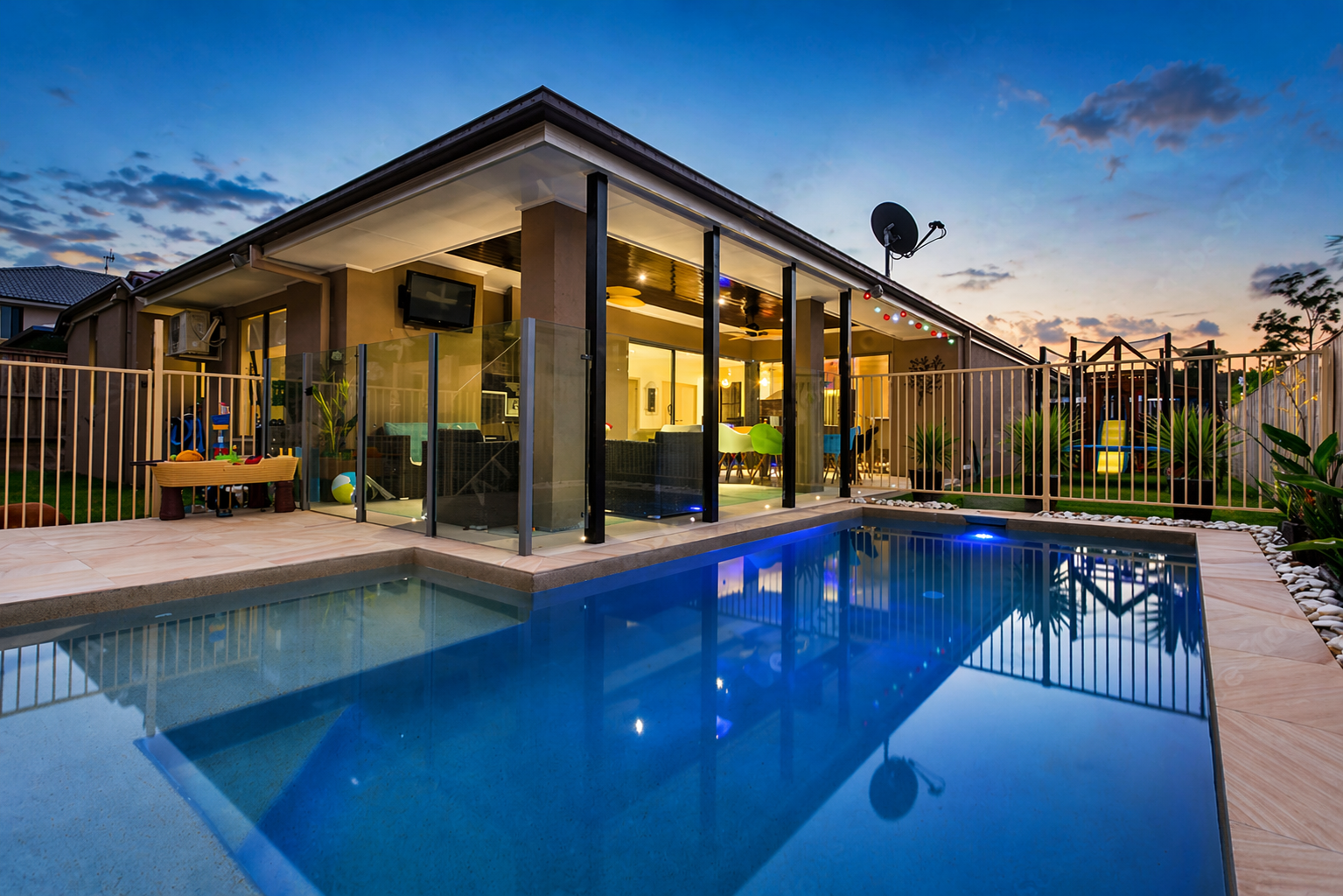
The rules are in Part 9A of the Building Regulations 2018 and are administered by councils, with guidance from the Building and Plumbing Commission (BPC), which replaced the Victorian Building Authority on 1 July 2025.
We check the whole barrier as it stands today, and whether wear is likely to make it non-compliant before the next inspection. Typical items include:
If a boundary fence forms part of your pool barrier, keeping it compliant is your responsibility as the pool owner, not your neighbour’s. For barriers built from 1 May 2010, a boundary fence used as a barrier generally needs to be at least 1.8 m high, with a 900 mm non-climbable zone at the top on the pool side.
Barriers built from 1 May 2010 can’t rely on a door from the house opening into the pool area. Older barriers may include house doors, but they must be self-closing and self-latching with the release mounted high. Windows that open onto the pool area need restricted openings or another compliant arrangement.
Whether your council due date is next month or your pool has never been registered, the steps are much the same. Here’s what to expect when you book with JLN.
Send us your address, the type of pool or spa and your council registration notice if you have one. The notice shows your due date and the barrier standard council has applied to your pool.
Our building surveyor walks the full barrier, tests every gate and door, measures heights, gaps and clear zones, and checks for climbable objects and wear that could cause problems before your next inspection.
If something fails, we explain what’s needed and give you written notice with time to fix it, up to 60 days, then re-inspect. Some serious defects require an immediate certificate of non-compliance.
Once the barrier complies, we issue your certificate of pool and spa barrier compliance (Form 23). Lodge it with your council within 30 days, and council will confirm when your next certificate is due.
Your barrier is assessed against the standard that applied when the pool or spa was built, not necessarily today’s rules. Council identifies it in your registration notice. Broadly:
That’s why two pools in the same street can be judged against different rules, especially for doors and windows. We confirm which standard applies before we inspect.
If your barrier doesn’t comply, we’ll give you written notice of what needs fixing and a reinspection date, allowing up to 60 days. If there’s clear progress at reinspection but the work isn’t finished, a further seven days may be allowed.
A certificate of non-compliance (Form 24) must be issued straight away if the barrier poses a significant and immediate risk, if any part is less than 1 m high, if a gate or door can’t fully close, or if a closed gate or door can be opened by someone who can’t reach the latch. The inspector lodges Form 24 with council, and it attracts a much higher council lodgement fee than a compliance certificate.
Once council receives a certificate of non-compliance, its municipal building surveyor decides what action to take. For minor defects this is often a barrier improvement notice (Form 25), which sets out the work required and a date by which you must lodge a certificate of compliance. For serious problems, council can use its wider powers under the Building Act 1993, including building notices and orders, and emergency orders where there’s immediate danger.
Ignoring a notice can lead to fines, so it pays to fix defects during our notice period. Read our guide to pool and spa barrier compliance in Victoria for more.
JLN Building Consultants is a building surveying consultancy based in Niddrie, in Melbourne’s north-west. Our directors bring over 20 years of combined experience across construction and building surveying, and our work covers the full pool and spa picture, from pool and spa building permits to barrier inspections and certificates.
Common questions about pool and spa barrier inspections in Victoria.
Every four years. After you lodge a certificate of barrier compliance, council tells you when the next one is due: four years after the previous certificate was lodged. A certificate is only valid for 30 days after it’s issued, so book your inspection a few weeks before the due date.
Yes, if they can hold more than 300 mm of water. The rules cover above-ground, relocatable and inflatable pools and spas, not just in-ground ones. A relocatable pool set up for three or more consecutive days must be registered by the fourth day, and a building permit is generally needed before installing the pool or its barrier.
No. A certificate of final inspection or occupancy permit confirms the building work was completed under its permit, but it isn’t a certificate of pool and spa barrier compliance. For a new pool or spa you still need a Form 23 certificate, lodged with council when you register.
It depends on the work. Minor repairs, such as adjusting a gate closer or fitting a new latch, generally don’t need a permit. Replacing or altering posts or footings does, as does a new barrier. After alterations made under a building permit, the new certificate must be lodged with council within 14 days.
Register it with your council now. The deadline for existing pools was 1 November 2020, and owners who don’t register can face an on-the-spot fine. Council also charges an information search fee for pools built or started before that date. Its notice will then tell you when your barrier certificate is due.
Tell us your address, pool or spa type and council due date, and we’ll arrange your pool barrier inspection. Request a free quote, call 0422 234 951, email info@jlnconsultants.com.au or contact us.